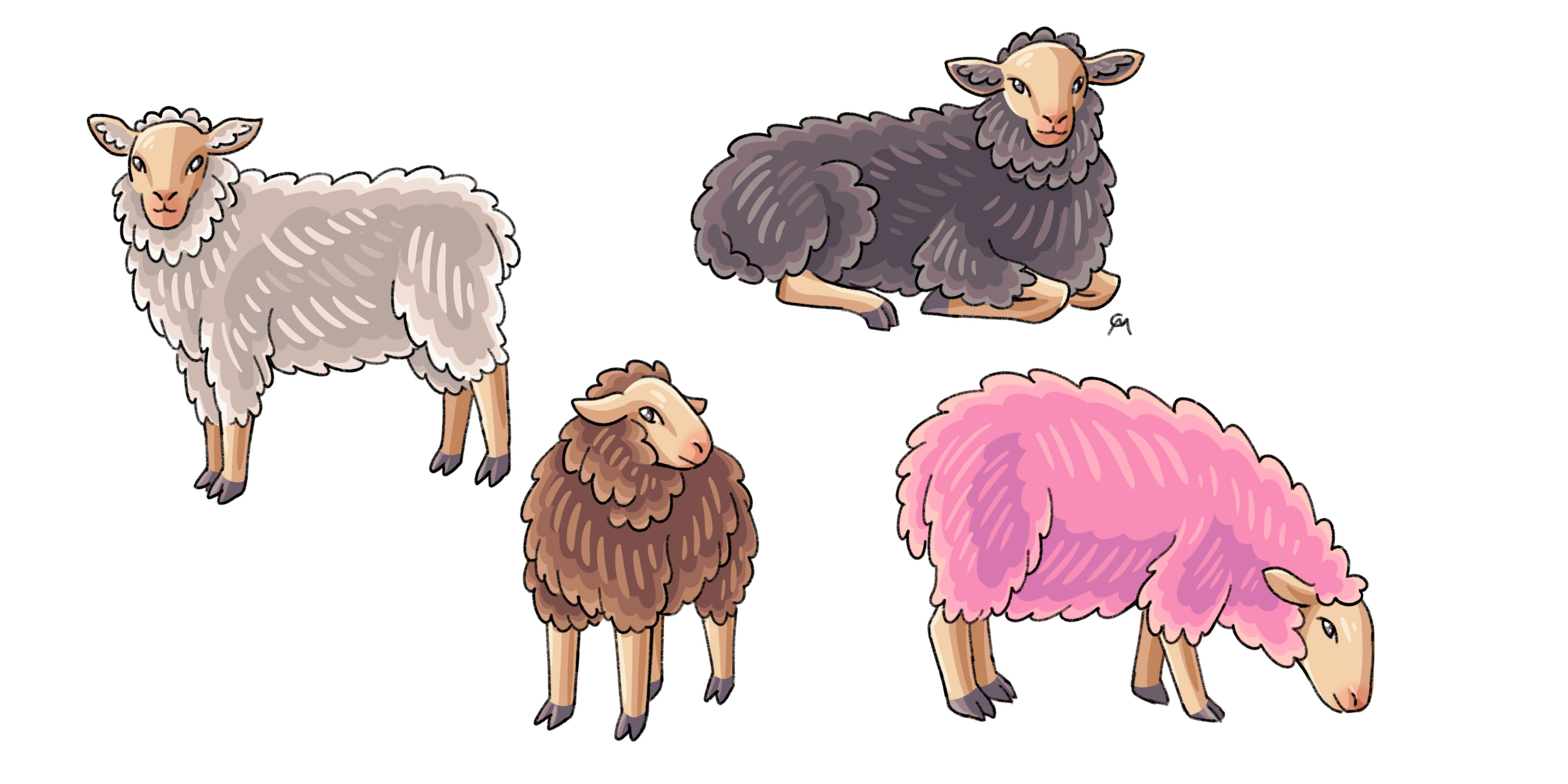
Minecraft Farm Mobs
One of the most essential aspects of playing survival Minecraft is ensuring you have plenty of food to saturate and heal yourself over time. Creating a good food source is crucial, especially in the early game. Whether it's tilling a large swath of land to grow wheat, potatoes, carrots, etc or luring in passive mobs into a pen to breed and slaughter, or even fishing in a large lake, there are many ways to ensure satiety. I’ve always been drawn to the first two, growing crops that in turn feed/breed my animals that I eventually slaughter for an abundance of highly saturated food products. It feels natural, cyclical, and gives me a purpose for creating large farmlands and grand barns. The passive mobs that are used for farming meat/animal products are chickens, cows, sheep, and pigs. Despite their simple, almost eternal presence in the game, they have always been some of my favorite mobs. They are present when you first spawn in a world, and they help you get started on your journey. Earlier this year, the Minecraft team dropped new variants for chickens, cows, and pigs depending on biome temperature. This was a huge shock for me as I never thought they would ever create variants for these mobs as they are so iconic in design, however I was blown away with their designs. Sheep were not given variants, however their wool colors now reflect the biomes they spawn in. Ever since that update, I knew I needed to draw these mobs and their variants.
Cows
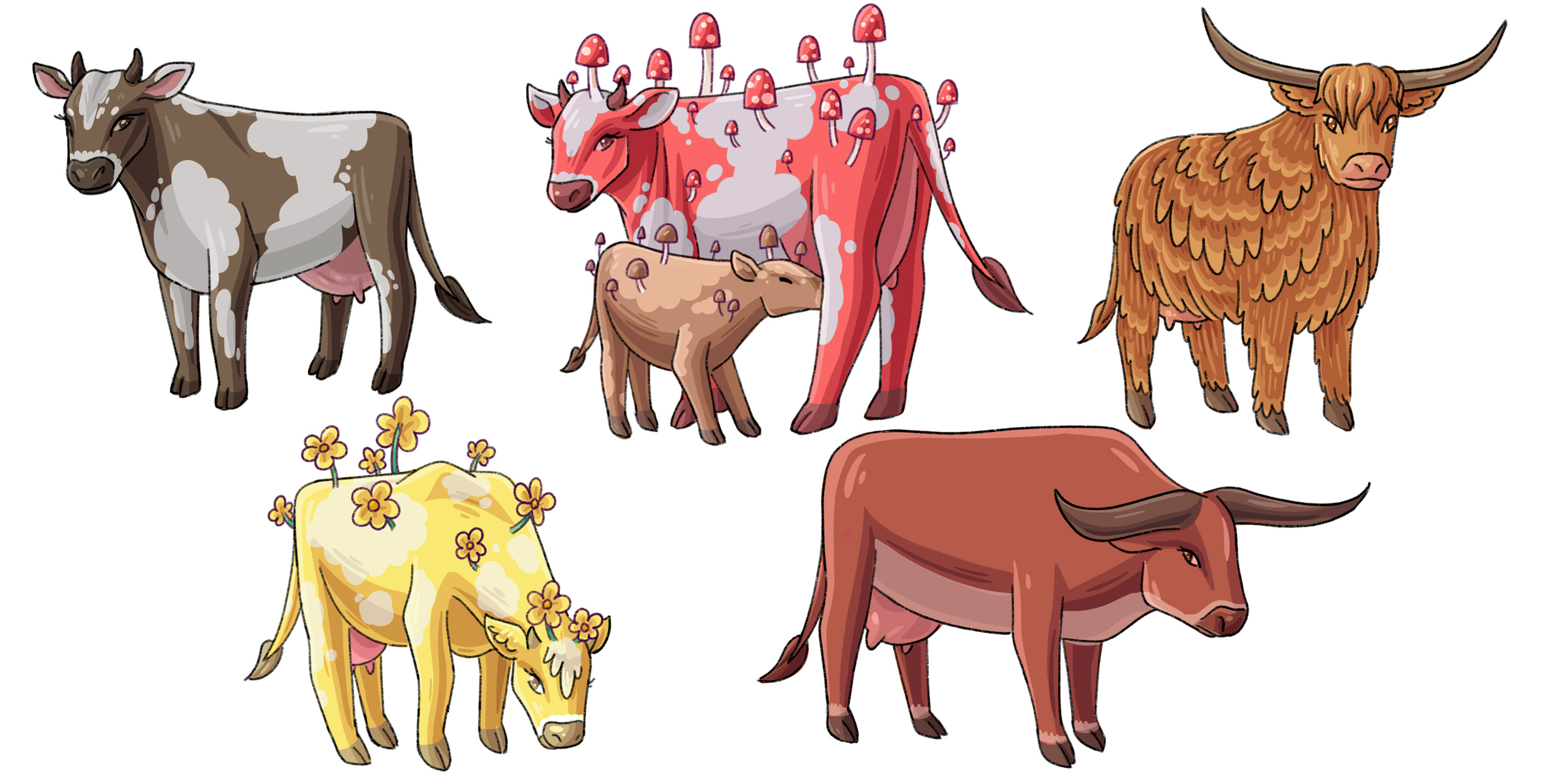
The original cow is a subversion of the typical white coat with black splotches that is reminiscent of dairy cows by having a dark coat with gray splotches. It wasn’t meant to be representative of any specific breed, but as a way to differentiate from the white sheep that also populate the same areas. The warm cow is based on the real world “Ankole” and “Texas Longhorn”, featuring broad, long wide set horns, a short deep warm coat with pale accents. The cold cow is based on a Highland Cow found in the Highlands of the British Isles. Featuring a thick furry coat, wide set horns, and a warm hue which contrasts the cooler tones of the cold biomes. The mooshroom is an older mob that comes in red and brown variants and is only found in the rarest biome, the Mooshroom Island. Red mooshrooms dominate the island, but in specific circumstances, namely being struck by lightning or a small chance from breeding can become brown. I showcased this with a red mother and her brown calf. The moobloom is a mob that was featured in the now defunct “Minecraft Earth” and recently was a contender in a mob vote. Sadly, this cow lost, but the spirit of its striking yellow coat with dandelions lives on in our hearts.
Pigs
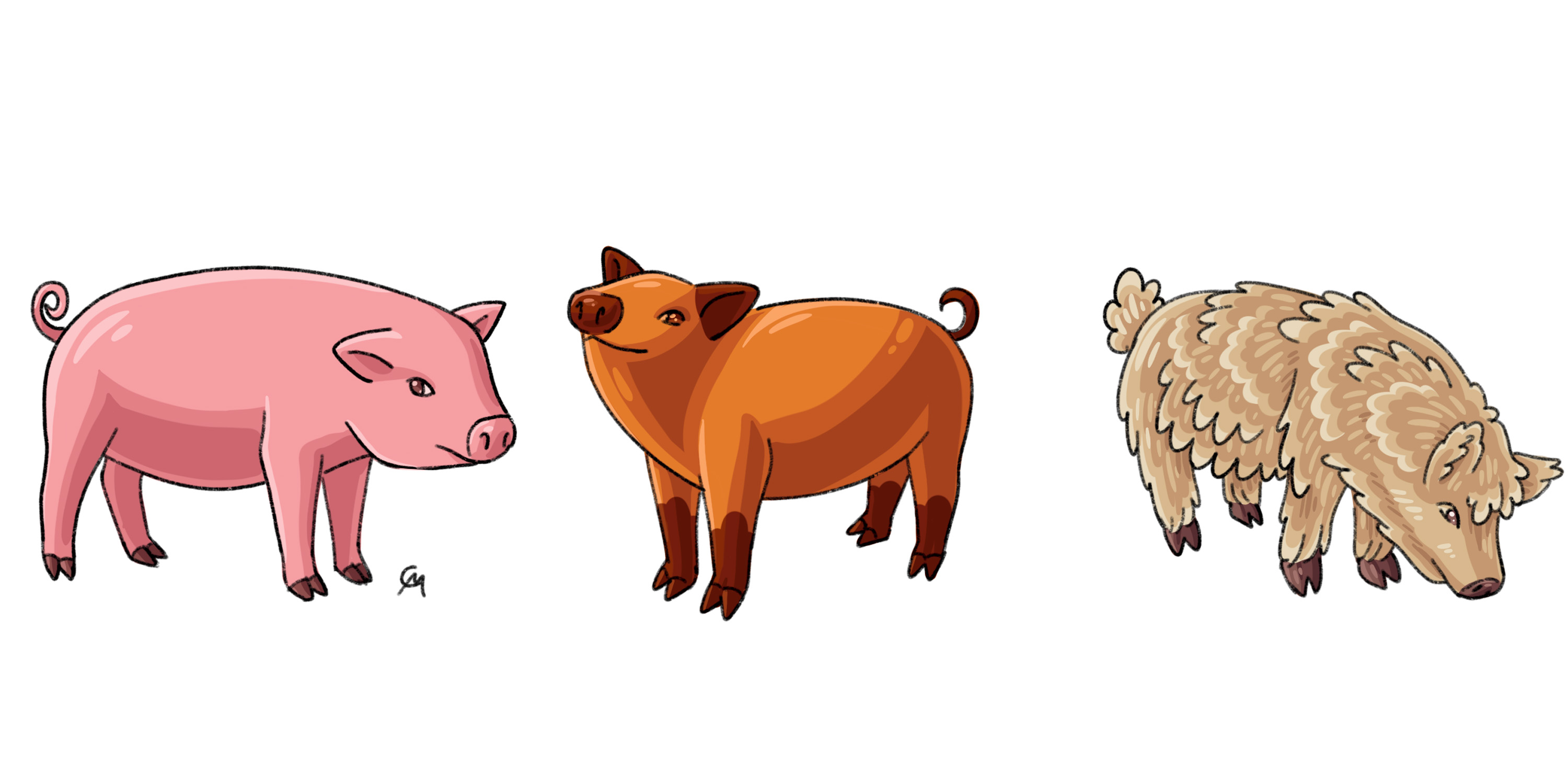
The original pig is based on the stereotypical pink pig found in a variety of media and is based on the “American Yorkshire”. The warm pig isn’t based on any breed of domestic pig, but its color resembles the “Red River Hog” with its reddish coat, and stark pale stripe down its back. The cold pig is most likely based on the “Mangalica” or “Sheep Pig” with its pale, long, furry coat and dark hooves.
Chickens
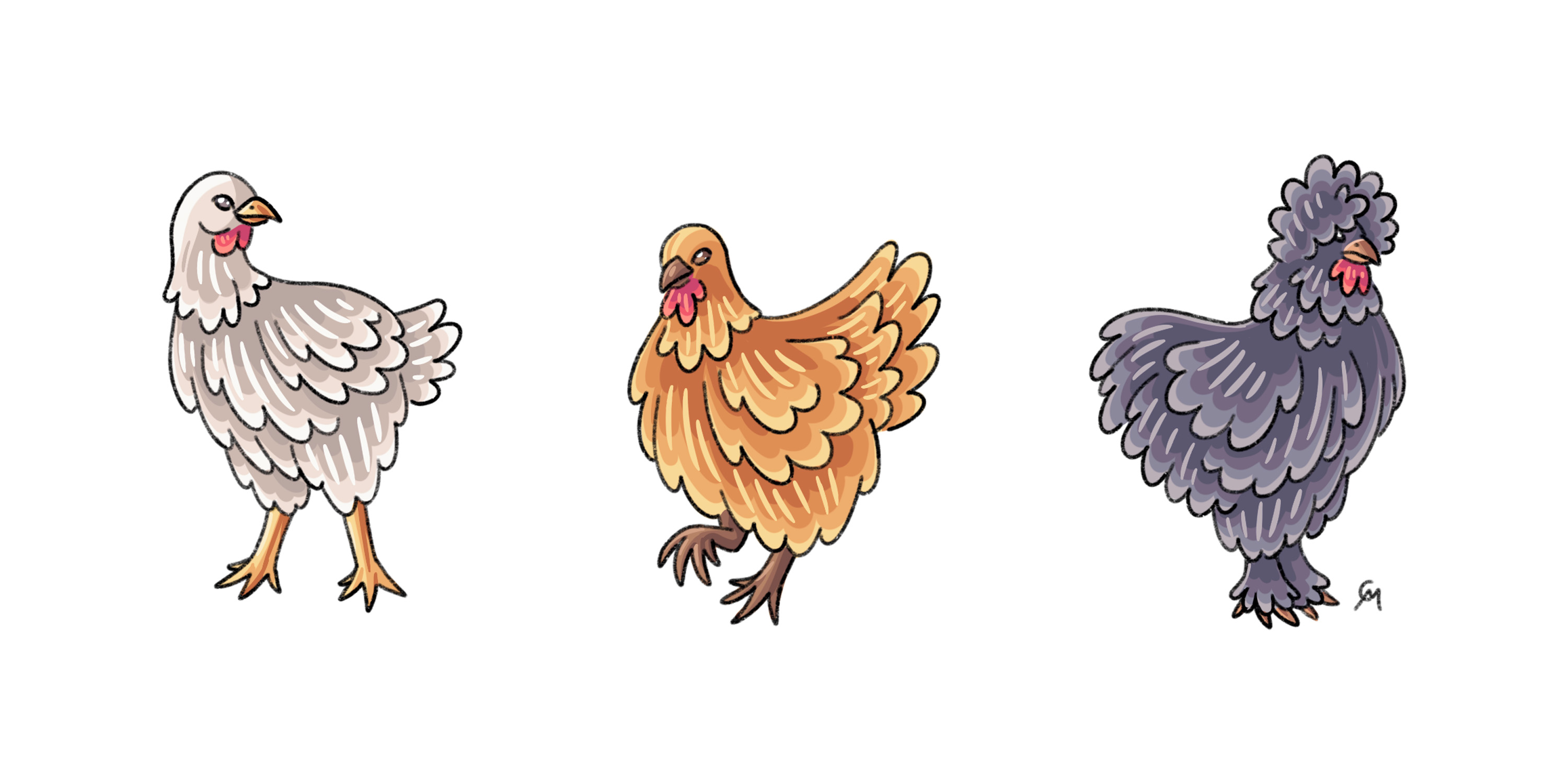
The original chicken is most certainly based on the iconic “White Leghorn” featuring stark white plumage, prominent red wattles, yellow legs, and as anyone who plays this game knows, produces a lot of eggs. The warm chicken seems to be based on the “Araucana” a breed known for its orange-y coat and tolerates warm climates, however I have my doubts it's based on any real breed since many breeds feature this warm colored coat. The cold chicken is based on varying crested breeds of chicken, namely the “Silkie” which features fluffier plumage, leg feathers that extend down to the feet and its iconic fluffy crown on its head.
Sheep
Unlike the previous mobs, sheep didn’t get additional variants, however the Minecraft team changed the way in which sheep’s wool spawned, depending on biome. This makes white sheep spawn more frequently in temperate biomes, brown in warm, black in cold, and gray scattered in the mix. The one outlier in sheep spawning is the rare pink sheep which has a 0.164% chance of spawning. Whenever I’ve stumbled upon this rare sheep, I try my best to nametag it and keep it safe.